2022 • 6 min read
Reducing the number of account transfer rejections
Product design
Usability testing
Agile
My role
I led the redesign of account transfers between October 2022 and December 2022, working closely with a Product Manager, Engineering Manager, and a great team of engineers. The scope of this project was to discover 2 to 3 improvements that engineering could build within a 3 month time frame.
Overview
Setting the stage
Altruist is an all-in-one platform for financial advisors to manage their business and clients. In 2020, Altruist released the support of ACATs, a way to seamlessly transfer assets over from outside accounts. By 2022, these transfers had a concerning amount of rejections.
So, what's the problem?
Nearly 20% of account transfers were rejected, which led to customer frustration and an overwhelming amount of work for customer support. Our goal was was to discover and deliver improvements to reduce the number of account transfer rejections.
Discovery
Learning from customer support
Our preliminary research consisted of chatting with the support and operation teams. These meetings revealed there were two glaring issues that needed to be addressed.

1. Too many transfer rejections — this not only damaged the user experience, but required an unnecessary amount of manual intervention from support and operations teams. The top reason for rejections was advisors were selecting the incorrect institution.

2. Unclear transfer timeline — advisors, advisor's clients, and customer support had zero visibility into the status and processing time of a transfer. This led to an overwhelming amount of customer support tickets from confused advisors.
"One of the biggest issues is if an Advisor wants to transfer an account from Wells Fargo, they have 4 Wells Fargo options to choose from."
Customer Support Team Member
Solution
How might we reduce the number of transfer rejections and give time back to customer support?
It was time to move into the ideation phase. We explored a few different concepts with varying levels of scope to see how we could deliver something impactful in the 3 month engineering timeline.
Concept 1
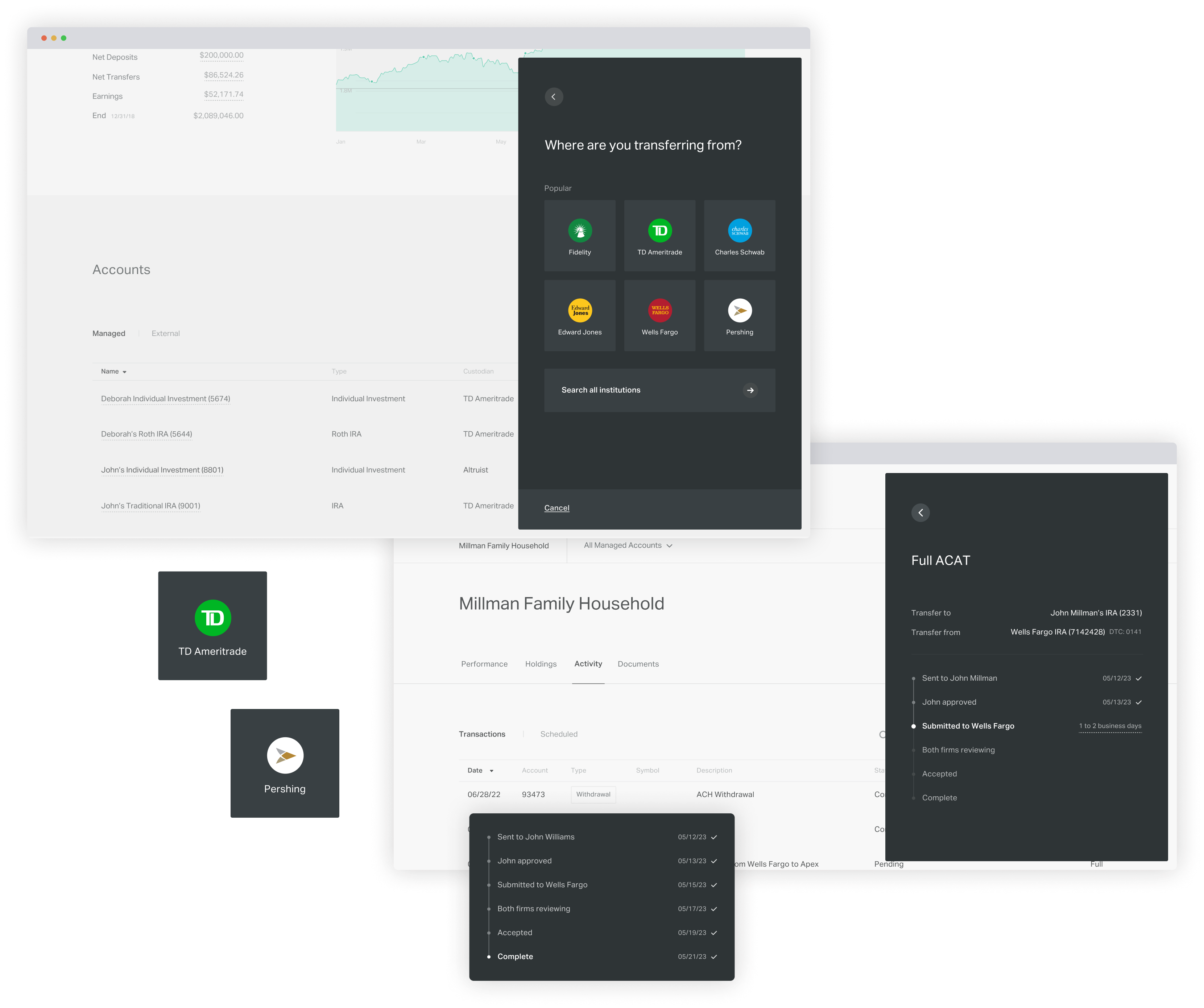
Highlight the popular institutions
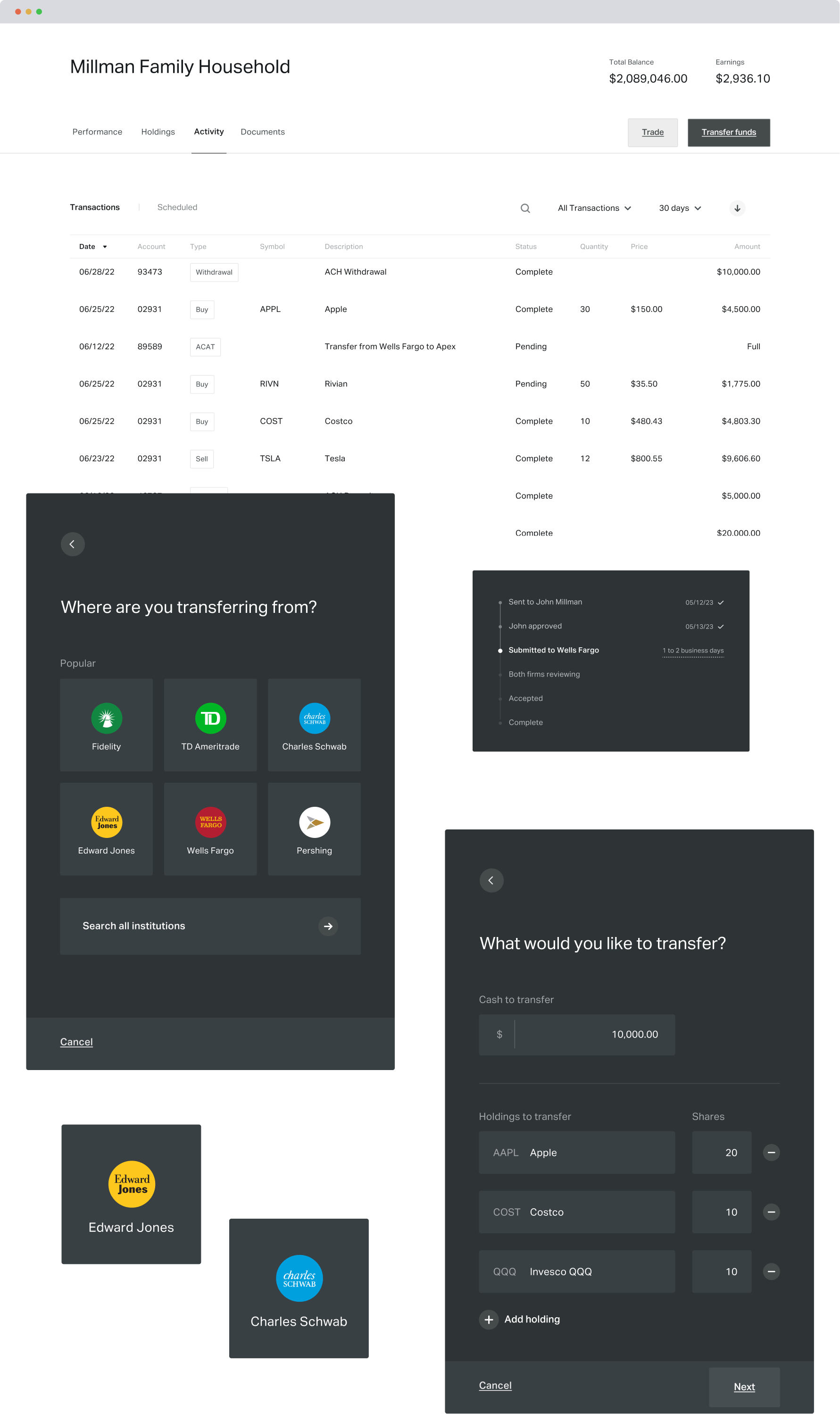
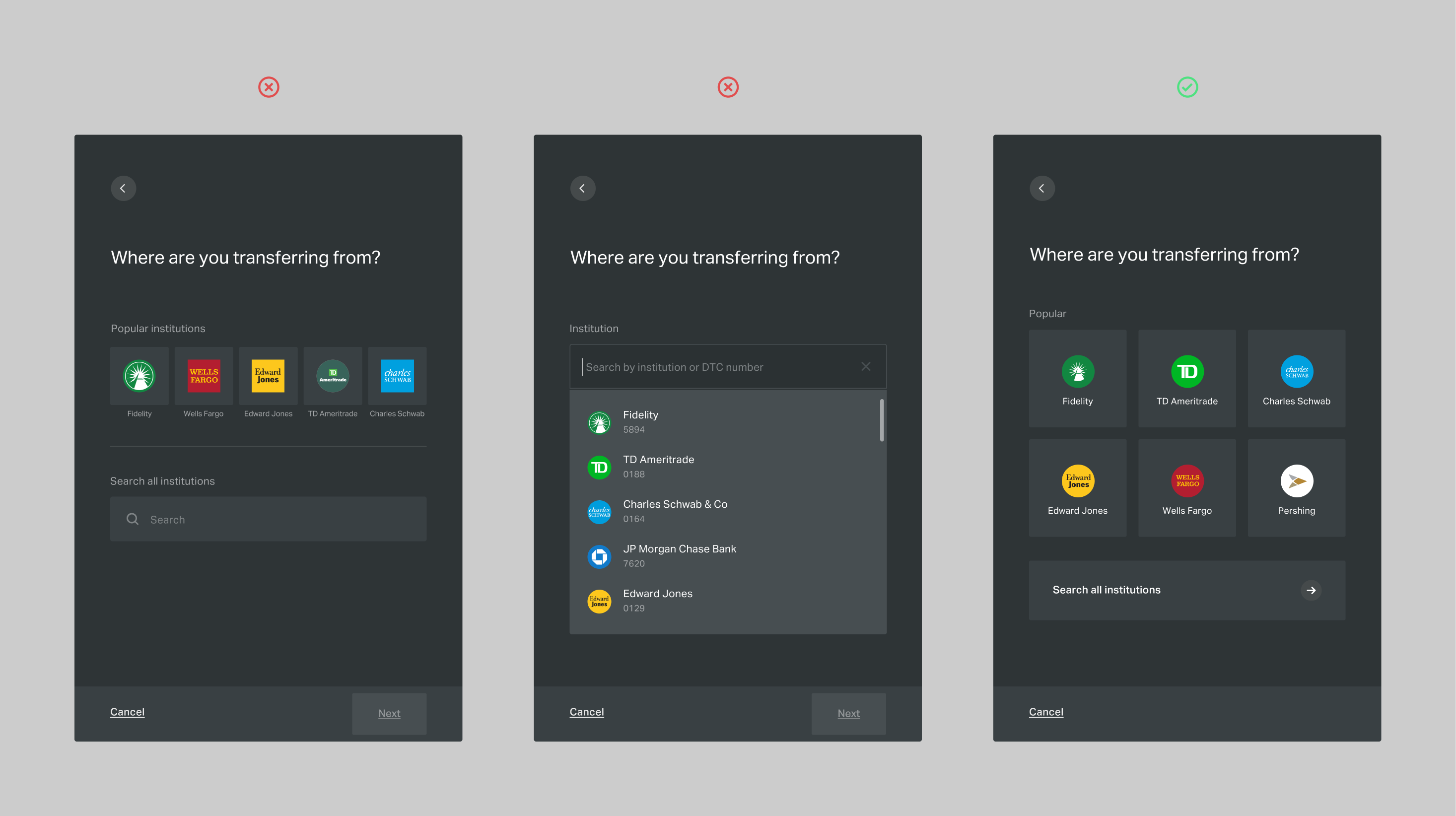
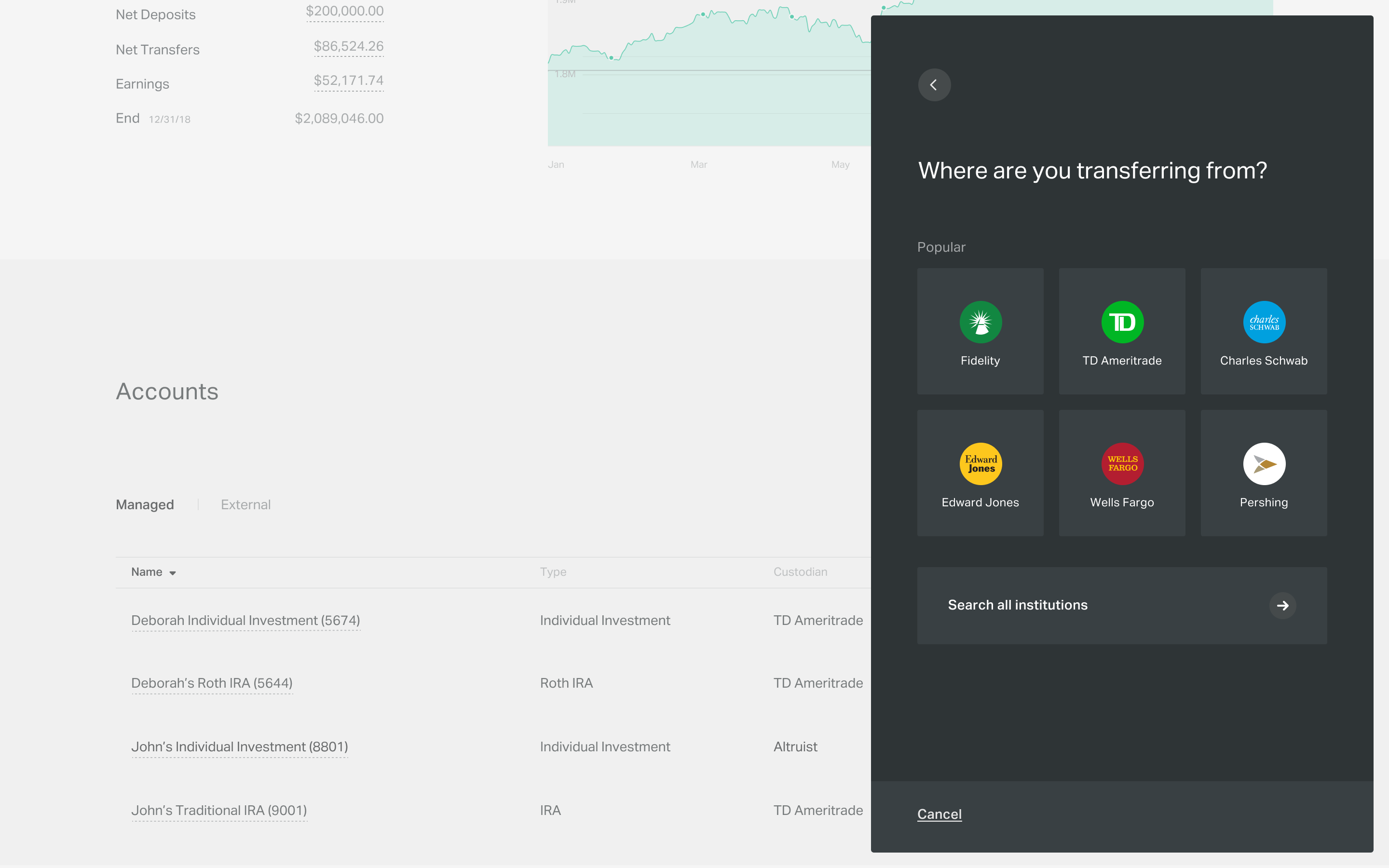
The biggest reason for transfer rejections was a selection the incorrect institution. The issue arose because many institutions have multiple options for ACATS, even though 99% of advisors needed to select the same option for their transfer. We decided to explore adding a "popular" screen in the transfer flow to surface the correct option for advisors.
Due to engineering constraints, we decided against adding popular institutions in the search bar.
Before
After
Concept 2
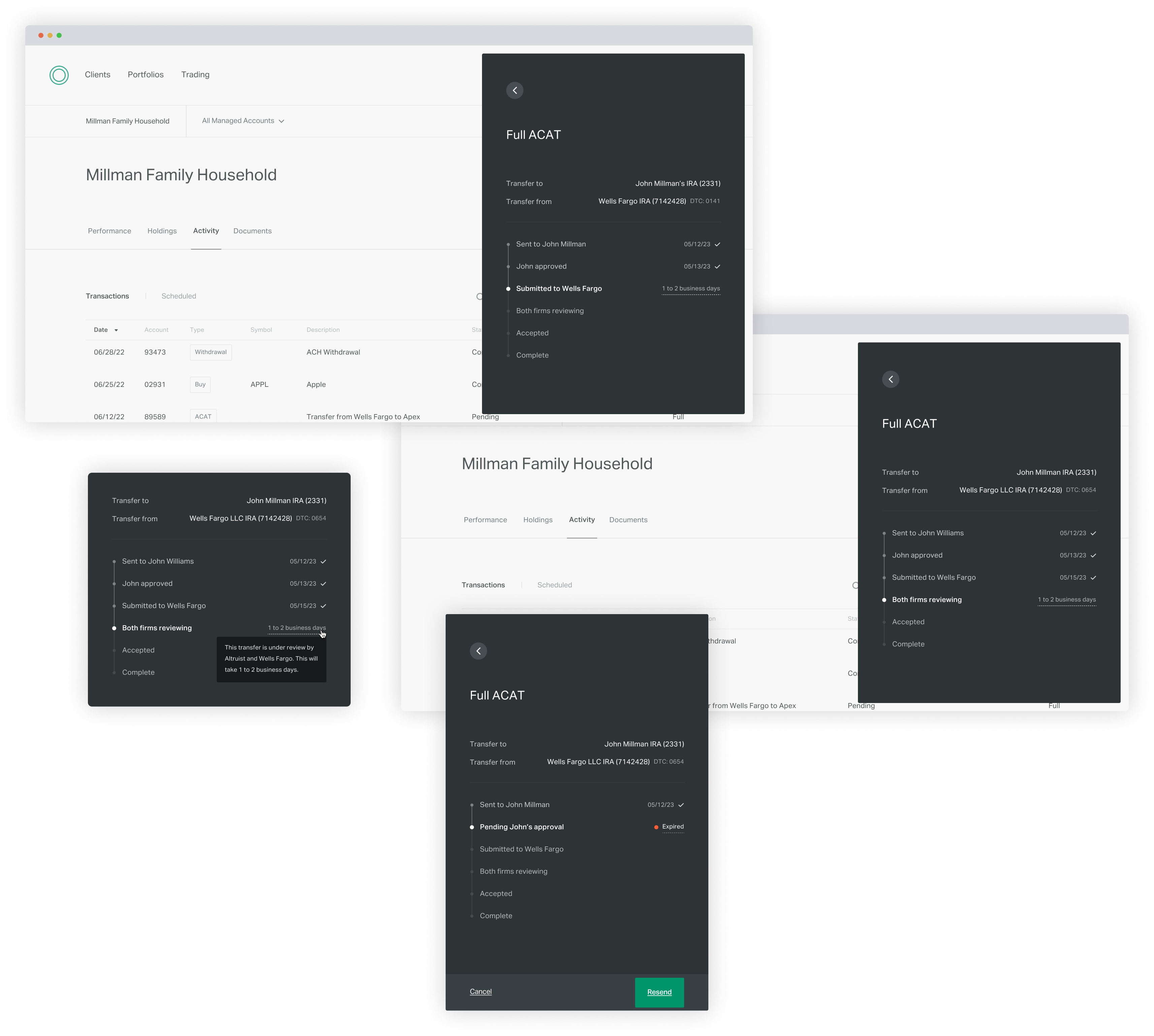
A pizza tracker for account transfers
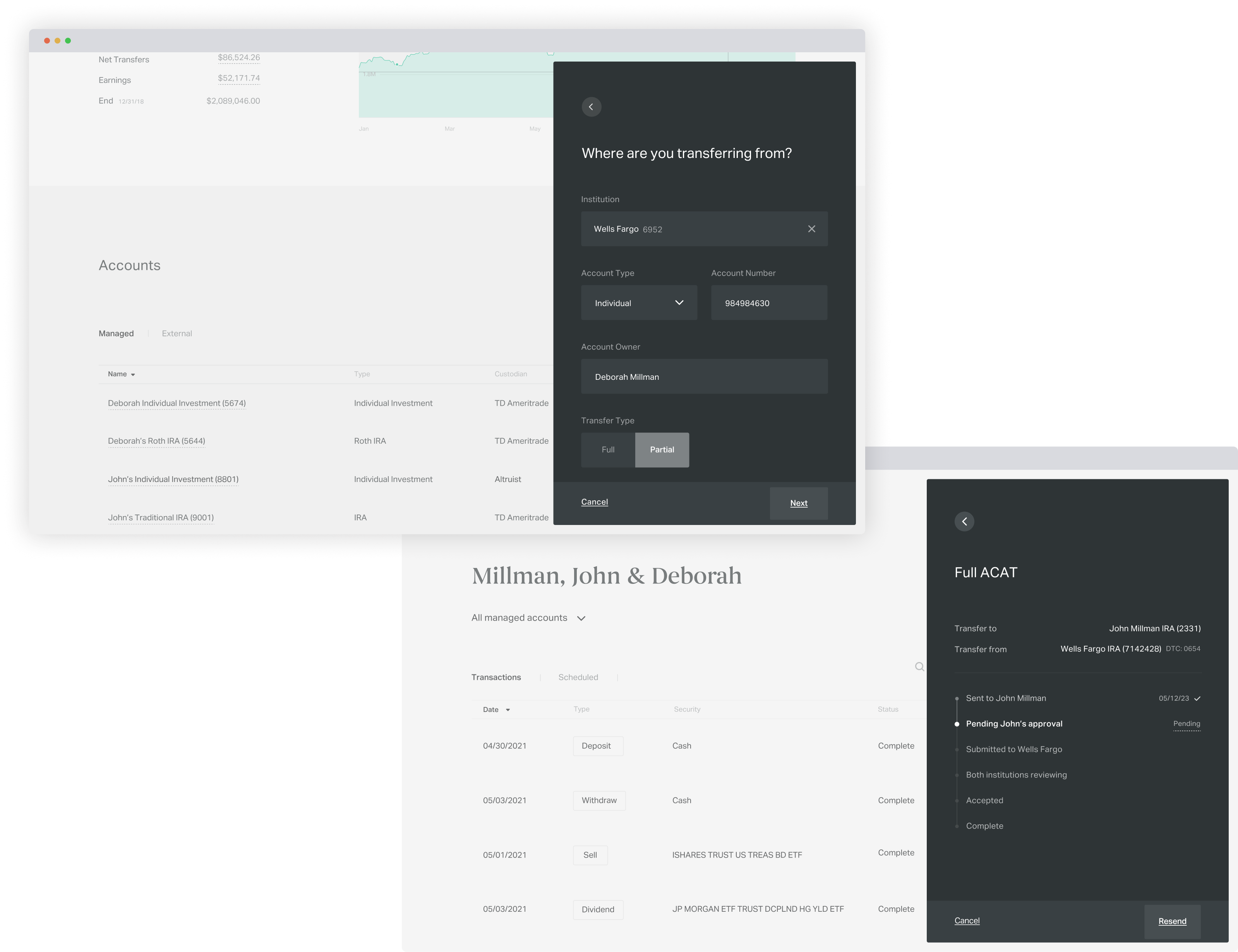
There are many steps to complete an ACAT, which was creating a lot of confusion around the processing timeframe. We explored adding a status tracker to show the full journey of the transfer with key dates and estimated processing times.
Concept 3
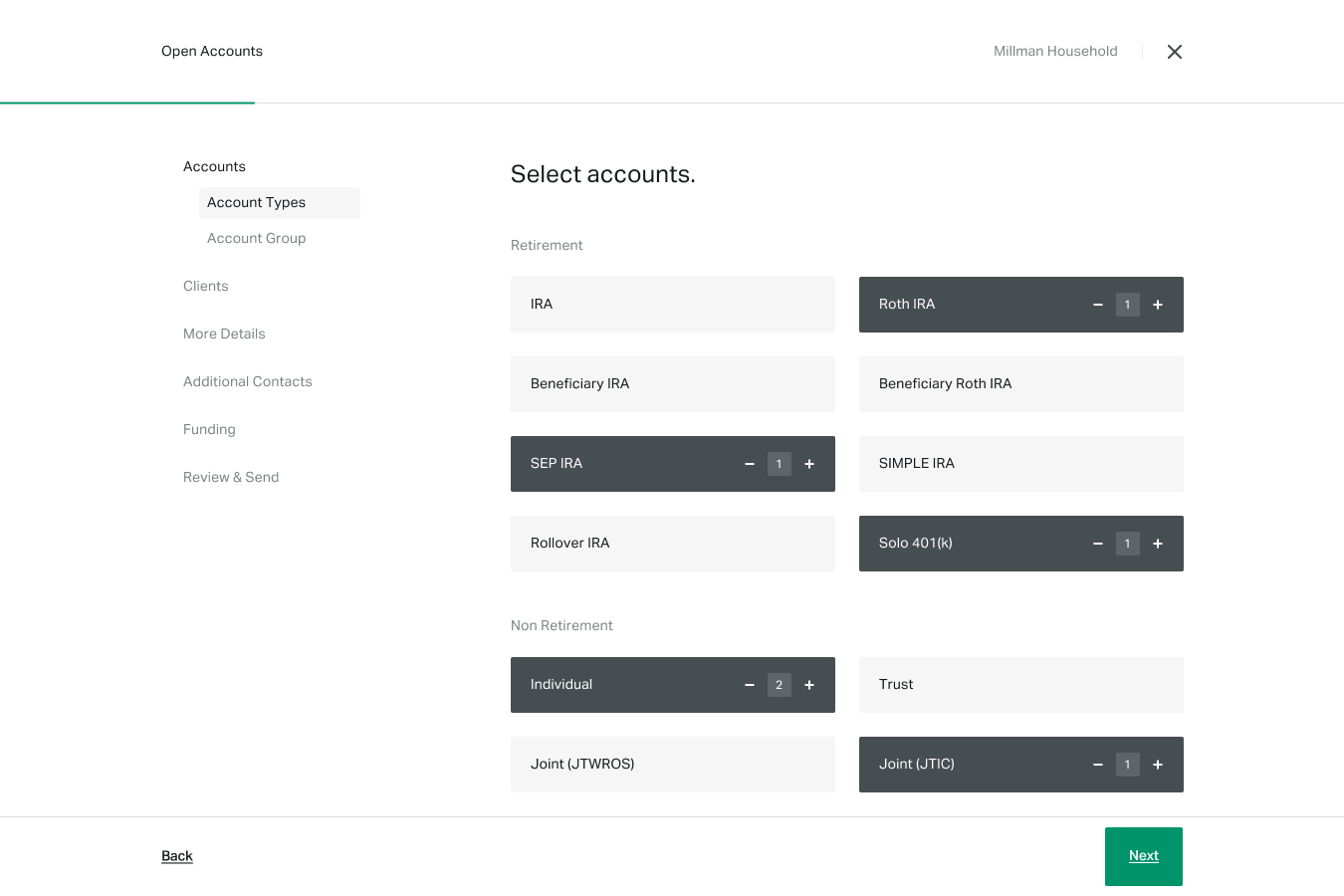
Support partial account transfers
In chatting with operations, we discovered if transfers included securities that could not be traded on Altruist, it could lead to a rejection of the entire transfer. To give advisors more customization and help them avoid any errors, we added the ability to choose which securities to transfer over to Altruist.
Testing the concepts remotely
Due to the tight timeline, we used Maze to test the usability and gather feedback on these designs remotely. Outside of testing usability, our research goal was to observe how advisors would interact with these 3 concepts. The results were encouraging!

— 94% of advisors used the popular section, rather than searching
— 97% of advisors found the accurate status of an ACAT
— 67% of advisors successfully initiated a partial ACAT

Deciding what to build
After spiking on these three concepts and reviewing the testing results with engineering and product, the team decided to move forward with adding the popular section and the status tracker. Due to feasibility issues and lower confidence in the testing results, we decided to descope partial transfers for the time being.
Positive results after release
6 months after releasing these additions, the numbers were quite positive. We expect the number of customer support tickets to continue to drop as advisors continue to discover the status tracker. 
39%
Reduction in transfer rejections
33%
Reduction in ACAT support tickets
Reflection and next steps
The key to the success of this launch was getting early feedback from customer support and operations. It helped us iterate quickly, test viable solutions, and deliver something impactful.

There is still a number of advisors selecting the wrong institution, so we believe the next step is to figure out how we can remove certain institutions from the database. Due to a shift in priorities, partial transfers still has not been released. The team is looking to prioritize this feature in 2024.